
Kratom Strains
Kratom Strains: Understanding Colors, Characteristics & Reported Effects
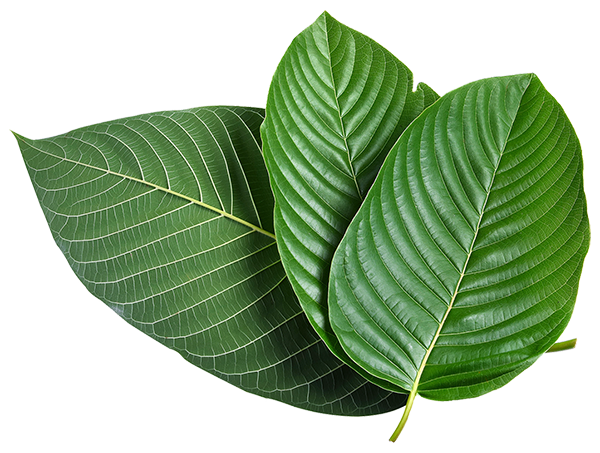
Kratom (Mitragyna speciosa) is a tropical tree native to Southeast Asia. For generations, its leaves have been part of traditional practices in countries such as Thailand, Malaysia, and Indonesia.
Today, kratom products are commonly identified by color and strain name. You may see names such as Red Bali, Green Maeng Da, White Borneo, or Yellow Vietnam. Understanding these labels can make the wide variety of kratom products much easier to navigate.
What Do Kratom Colors Mean?
The three primary kratom color categories are Red, Green, and White. Yellow and Gold products are also commonly available and are generally associated with particular processing or blending methods.
It is important to understand that these colors don't necessarily describe the actual color of the finished powder. Instead, they're classifications used throughout the kratom marketplace.
? Red Vein Kratom
Red strains are among the most recognizable varieties of kratom.
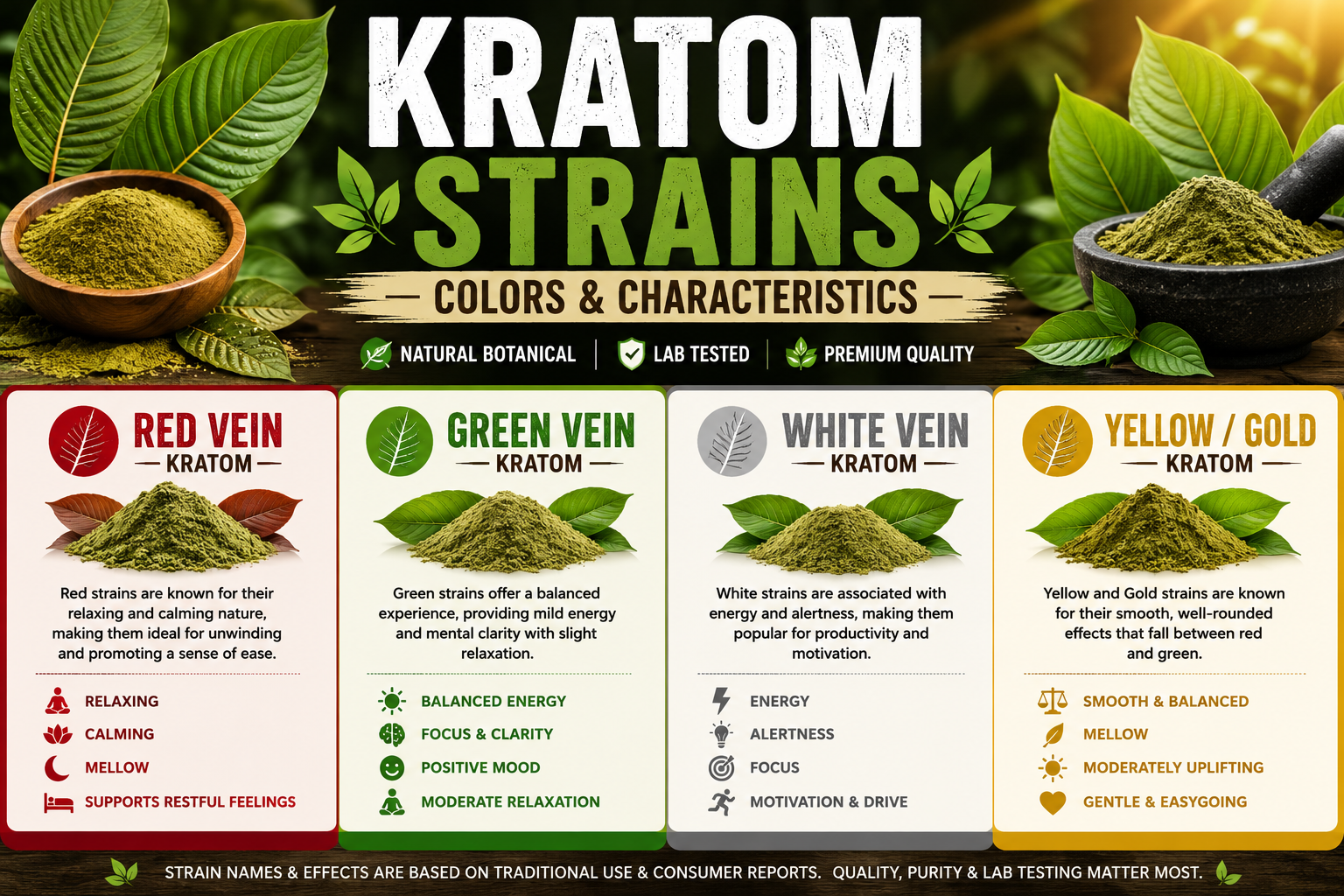
Consumers commonly describe red varieties as having a slower, calmer and more relaxing character compared with green and white varieties.
Popular Red strains include:
-
Red Bali
-
Red Maeng Da
-
Red Borneo
-
Red Sumatra
-
Red Malay
Commonly reported characteristics: relaxing, mellow, calming and more suitable for people seeking a less stimulating experience.
? Green Vein Kratom
Green kratom is commonly described as the middle ground between Red and White.
Many consumers choose green varieties because they're associated with a more balanced experience rather than being strongly relaxing or strongly stimulating.
Popular Green strains include:
-
Green Maeng Da
-
Green Malay
-
Green Bali
-
Green Borneo
-
Green Thai
Commonly reported characteristics: balanced energy, alertness, focus, positive mood and moderate relaxation.
Because of this balance, Green strains are among the most popular choices in the kratom marketplace.
⚪ White Vein Kratom
White strains are generally associated with the more energizing and stimulating side of the kratom spectrum.
Consumers often describe White varieties as brighter and more uplifting than Red varieties.
Popular White strains include:
-
White Maeng Da
-
White Borneo
-
White Thai
-
White Sumatra
-
White Bali
Commonly reported characteristics: energy, alertness, motivation, focus and stimulation.
? Yellow & Gold Kratom
Yellow and Gold varieties are somewhat different from the traditional Red, Green and White classifications.
These products may be created through specialized drying, fermentation or blending techniques depending upon the producer.
Consumers often describe Yellow and Gold varieties as smooth and balanced, sometimes falling between the characteristics traditionally associated with Green and Red products.
Popular varieties include:
-
Yellow Vietnam
-
Yellow Maeng Da
-
Gold Bali
-
Gold Maeng Da
Commonly reported characteristics: smooth, balanced, mellow and moderately uplifting.
What About Names Like Maeng Da, Bali, Borneo & Malay?
The second part of a kratom name generally identifies a regional name, product style or commercial strain designation.
Maeng Da is one of the most widely recognized names and is commonly marketed as a stronger or more robust variety.
Bali varieties are extremely popular and are available in Red, Green and White classifications.
Borneo takes its name from the large Southeast Asian island associated with kratom cultivation and production.
Malay refers to Malaysian-associated varieties and is commonly seen in Green, Red and White products.
Thai and Sumatra are additional geographic names frequently used in kratom strain labeling.
A product's complete name combines these classifications. For example, Green Maeng Da identifies a Green-category product carrying the Maeng Da strain designation.
Do Kratom Colors Really Produce Different Effects?
This is where kratom becomes especially interesting.
Red, Green and White products are traditionally marketed as having different characteristics, and many consumers report noticing differences between them. However, scientific research has not established that every product within a particular color category will consistently produce a specific effect.
Factors such as growing conditions, harvesting, drying and processing methods, storage and the natural alkaloid composition of an individual batch can all influence the finished botanical product.
For that reason, strain and color names are best viewed as useful product classifications rather than guarantees of a particular experience.
Quality Matters More Than the Name
Whether a product says Red Bali, Green Malay or White Maeng Da, the strain name alone does not determine its quality.
Consumers should pay attention to factors such as:
-
Product transparency
-
Batch identification
-
Independent laboratory testing
-
Proper manufacturing and handling
-
Clear labeling
-
Testing for contaminants and heavy metals
Kratom is a natural botanical, and natural products can vary from one harvest and batch to another.
Understanding the Kratom Color Spectrum
An easy way to remember how the major colors are traditionally described is:
WHITE → More stimulating
GREEN → More balanced
RED → More relaxing
YELLOW/GOLD → Smooth and balanced
These descriptions represent traditional marketing classifications and consumer reports—not guaranteed medical or pharmacological effects.
Final Thoughts
Understanding kratom doesn't have to be complicated. Start with the color family—Red, Green, White, Yellow or Gold—and then look at the individual strain designation.
While strain names can help consumers compare products, quality, processing and laboratory testing are ultimately more important than the name printed on the package.
Important Notice
This information is provided for educational purposes only. Statements describing kratom effects are based on traditional use, product classifications and consumer reports and should not be interpreted as claims that kratom diagnoses, treats, cures or prevents any disease. Kratom products have not been approved by the U.S. Food and Drug Administration for medical use.